
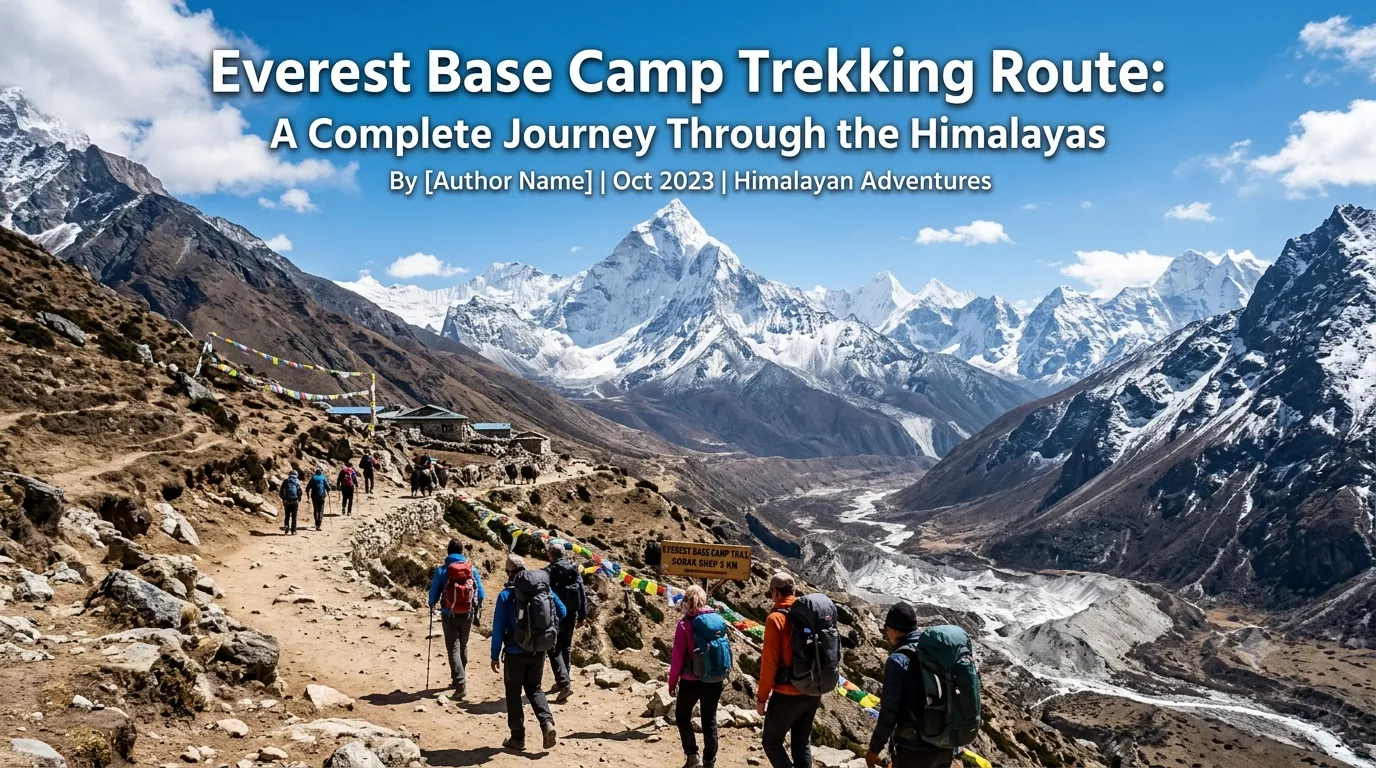
The Everest Base Camp trekking route is one of the most iconic adventure trails in the world. Leading through the spectacular Khumbu region of Nepal, this journey gives trekkers an opportunity to walk beneath some of the highest mountains on Earth, experience authentic Sherpa culture, and reach the legendary base of Mount Everest. For adventure lovers, the route combines natural beauty, physical challenge, cultural discovery, and unforgettable Himalayan scenery.
Every year, trekkers from around the world travel to Nepal to follow this famous path. The journey is not only about reaching Everest Base Camp. It is also about exploring mountain villages, crossing suspension bridges, visiting ancient monasteries, and gradually adapting to the high-altitude environment. With proper preparation and a suitable itinerary, the trek can become one of the most rewarding experiences of a lifetime.
Where Does the Everest Base Camp Trek Begin?
The classic Everest Base Camp trekking route usually begins in Lukla, a small mountain town that serves as the main gateway to the Everest region. Most trekkers reach Lukla by taking a short flight from Kathmandu or, depending on flight operations, from another designated airport.
After arriving in Lukla, the trekking journey typically starts with a relatively gentle walk toward Phakding. This first section allows travelers to become familiar with the mountain environment while enjoying views of green valleys, flowing rivers, and traditional settlements.
From Phakding, the trail continues toward Namche Bazaar, one of the most important stops on the entire trek.
Phakding to Namche Bazaar
The walk from Phakding to Namche Bazaar is a memorable part of the journey. The trail passes through beautiful forests, small villages, and areas connected by suspension bridges. Trekkers follow the Dudh Koshi River and gradually gain elevation.
Namche Bazaar is the main commercial center of the Khumbu region. Surrounded by mountains, this lively settlement offers lodges, cafés, shops, bakeries, and essential trekking services. It is also an important acclimatization point.
Most well-planned itineraries include an additional day in Namche Bazaar. This rest and acclimatization period helps the body adjust to the increasing altitude. Trekkers may take short hikes to nearby viewpoints before returning to Namche for the night.
Namche Bazaar to Tengboche
After leaving Namche Bazaar, the Everest Base Camp trekking route continues toward Tengboche. This section offers magnificent Himalayan landscapes and, in favorable weather, impressive mountain views.
Tengboche is especially famous for its monastery, which holds great spiritual and cultural significance in the Everest region. The peaceful surroundings, mountain backdrop, and Buddhist traditions make this stop particularly meaningful.
The route includes both descending and climbing sections, so trekkers should maintain a comfortable pace. Walking slowly becomes increasingly important as the elevation rises.
Tengboche to Dingboche
The next major stage leads from Tengboche toward Dingboche. Along the way, trekkers pass through beautiful settlements and increasingly open alpine landscapes. The vegetation gradually changes as the route moves higher into the mountains.
Dingboche is another major acclimatization destination. Spending an extra day here is common and highly beneficial. Short acclimatization hikes may be included to help the body prepare for the more demanding elevations ahead.
At this stage, the landscape becomes more dramatic. Trekkers are surrounded by rugged terrain, wide valleys, and towering Himalayan peaks. The sense of being deep within the high mountains becomes much stronger.
Dingboche to Lobuche
From Dingboche, the trail continues toward Lobuche. This part of the Everest Base Camp trekking route is physically demanding because of the altitude and rougher terrain. Even experienced hikers may notice that walking becomes slower as oxygen levels decrease.
The route passes through striking mountain scenery and areas that reflect the history of Himalayan climbing. Trekkers should avoid rushing and pay close attention to hydration, rest, and signs of altitude-related discomfort.
Lobuche is a small settlement where trekkers normally spend the night before continuing toward Gorak Shep and Everest Base Camp.
Gorak Shep and Everest Base Camp
The journey from Lobuche to Gorak Shep brings trekkers close to the main objective. Gorak Shep is one of the highest overnight stops on the classic route and acts as the final settlement before Everest Base Camp.
After reaching Gorak Shep, trekkers continue across rugged glacial terrain toward Everest Base Camp. The path can be challenging, but the excitement of approaching this legendary destination provides strong motivation.
Reaching Everest Base Camp is an emotional moment for many travelers. Surrounded by glaciers, ice formations, and enormous Himalayan peaks, trekkers can appreciate the scale and beauty of the region. Although the summit of Mount Everest is not always clearly visible from the base camp itself, the location remains one of the most celebrated trekking destinations in the world.
Kala Patthar: A Famous Everest Viewpoint
For many trekkers, the journey also includes an ascent of Kala Patthar. This viewpoint is famous for offering exceptional views of Mount Everest and surrounding peaks.
The climb is demanding because of the high altitude, but the panoramic scenery can be extraordinary when conditions are clear. Many itineraries schedule the hike early in the morning, depending on weather and local conditions.
After visiting Kala Patthar, trekkers begin the return journey through familiar villages toward Lukla.
How Difficult Is the Trekking Route?
The Everest Base Camp trekking route is considered moderately to highly challenging. It does not usually require technical mountaineering skills, but trekkers need good physical fitness, mental endurance, and careful altitude management.
The main challenge is elevation rather than technical difficulty. Long walking days, cold temperatures, changing weather, and reduced oxygen can make the journey demanding. A gradual itinerary with sufficient acclimatization days is essential.
Regular walking, cardiovascular exercise, stair climbing, and strength training before the trip can improve preparation.
Best Time for the Everest Base Camp Trek
Spring and autumn are generally considered the most popular trekking seasons. Spring offers attractive mountain conditions and colorful landscapes in lower regions, while autumn is widely appreciated for stable conditions and clear Himalayan views.
Winter trekking is possible for experienced and well-prepared travelers, but temperatures can be extremely cold. The summer monsoon period may bring rain, cloud cover, slippery paths, and transportation disruptions.
Choosing the right season depends on personal preferences, experience, weather expectations, and tolerance for crowds.
Everest Region Trekking Options: Explore the Best Trails in the Himalayas
The Everest region is one of the most spectacular trekking destinations in the world. Located in the northeastern Himalayas of Nepal, this legendary area attracts adventure lovers with its towering mountains, traditional Sherpa villages, ancient monasteries, and dramatic high-altitude landscapes. While many travelers immediately think of Everest Base Camp, there are several outstanding Everest region trekking options suitable for different fitness levels, travel schedules, and adventure goals.
From classic routes to remote valleys and challenging mountain passes, the region offers a remarkable variety of trekking experiences. Whether you are visiting Nepal for the first time or returning for a more demanding Himalayan journey, understanding the available routes can help you choose the right adventure.
Everest Base Camp Trek
The Everest Base Camp Trek is the most famous trekking route in the region. It takes travelers deep into the Khumbu Valley and offers close views of some of the highest mountains on Earth. Most journeys begin with a flight to Lukla, followed by a gradual trek through Phakding, Namche Bazaar, Tengboche, Dingboche, Lobuche, and Gorak Shep.
The main objective is to reach Everest Base Camp, located at approximately 5,364 meters. Trekkers also commonly climb Kala Patthar for an exceptional panoramic view of Mount Everest and surrounding peaks.
Among all Everest region trekking options, this route is particularly attractive to first-time visitors who want a classic Himalayan experience. The journey combines mountain scenery, Sherpa culture, comfortable teahouse accommodation, and a strong sense of achievement.
Everest Three Passes Trek
For experienced trekkers seeking a more demanding challenge, the Everest Three Passes Trek is one of the finest choices. This adventurous circuit crosses three major high-altitude passes: Kongma La, Cho La, and Renjo La. Each pass rises above 5,000 meters and requires good physical fitness, proper acclimatization, and careful preparation.
The route connects several important areas of the Khumbu region and may include Everest Base Camp, Kala Patthar, the Gokyo Valley, and remote mountain settlements. Compared with the standard Base Camp route, it provides a broader exploration of the Everest landscape.
This trek is ideal for those who want long walking days, rugged terrain, high passes, and fewer crowds on certain sections of the trail.
Gokyo Lakes Trek
The Gokyo Lakes Trek is an excellent alternative to the traditional Everest Base Camp journey. The route leads into the beautiful Gokyo Valley, known for its turquoise glacial lakes, massive glaciers, and impressive mountain scenery.
A major highlight is the climb to Gokyo Ri, a viewpoint offering sweeping views of Everest, Lhotse, Makalu, Cho Oyu, and other Himalayan peaks. Trekkers can also witness the enormous Ngozumpa Glacier, one of the most remarkable natural features in the region.
For travelers comparing Everest region trekking options, the Gokyo route is a strong choice because it combines high-altitude adventure with peaceful landscapes and distinctive scenery.
Everest View Trek
Not every traveler has enough time for a long expedition-style journey. The Everest View Trek is designed for visitors who want to experience the Khumbu region within a shorter schedule. It generally includes Lukla, Phakding, Namche Bazaar, and nearby viewpoints.
Namche Bazaar is the cultural and commercial center of the Everest region. From surrounding locations, trekkers may enjoy views of Everest, Ama Dablam, Thamserku, and other mountains when weather conditions are favorable.
This route is suitable for travelers with limited time and those who prefer a less demanding itinerary. However, altitude should still be taken seriously, and gradual ascent remains important.
Everest Base Camp Trek with Helicopter Return
The Everest Base Camp Trek with helicopter return has become an attractive option for travelers seeking adventure with added comfort and convenience. Trekkers follow the traditional route toward Base Camp and Kala Patthar but return by helicopter instead of walking all the way back to Lukla.
This approach can reduce the overall trip duration while offering a scenic aerial perspective of the Himalayan landscape. It is particularly appealing to travelers with limited vacation time or those who want to combine trekking with a premium travel experience.
Among modern Everest region trekking options, this itinerary provides a practical balance between physical adventure and efficient travel.
Pikey Peak Trek
The Pikey Peak Trek is a quieter journey in the lower Everest region. It is known for beautiful sunrise and sunset views, traditional villages, Buddhist monasteries, and peaceful trails. Compared with the main Khumbu routes, Pikey Peak generally receives fewer trekkers.
The trek provides broad Himalayan panoramas and opportunities to experience local culture away from the busiest trekking corridors. It is also a good choice for travelers who prefer moderate trekking and want to avoid the extreme elevations reached on routes such as Everest Base Camp or the Three Passes.
Choosing the Right Everest Trek
Selecting the best trek depends on several factors. Travelers should consider available time, previous trekking experience, physical fitness, preferred altitude, budget, and interest in cultural or scenic experiences.
The Everest Base Camp route is suitable for a classic adventure, while the Three Passes circuit is better for highly experienced trekkers seeking a major physical challenge. Gokyo is ideal for glacial lakes and panoramic viewpoints, whereas the Everest View Trek works well for shorter holidays. Pikey Peak offers a quieter cultural experience, and a helicopter-return itinerary provides greater convenience.
Regardless of the route, acclimatization is essential. Trekkers should maintain a gradual pace, stay hydrated, prepare for changing weather, and avoid ignoring symptoms of altitude illness.
Best Time for Trekking in the Everest Region
Spring, particularly March to May, and autumn, especially September to November, are generally considered the main trekking seasons. These periods often provide more stable conditions and clearer mountain views.
Winter trekking is possible on selected routes, but temperatures can become extremely cold at higher elevations. The summer monsoon season may bring rain, clouds, slippery trails, and flight disruptions. The most suitable season depends on the chosen route and the trekker’s tolerance for cold or variable weather.
Conclusion
The wide range of Everest region trekking options makes this Himalayan destination suitable for many types of travelers. The classic Everest Base Camp Trek offers an iconic journey, while the Three Passes route delivers a demanding high-altitude challenge. Gokyo provides stunning lakes and glaciers, Pikey Peak offers quieter trails, and shorter Everest View itineraries make the region accessible to travelers with limited time.
Choosing the right route requires realistic planning based on fitness, schedule, altitude experience, and personal interests. With proper preparation and responsible acclimatization, trekking in the Everest region can become an extraordinary journey through one of the most impressive mountain landscapes on Earth.
