
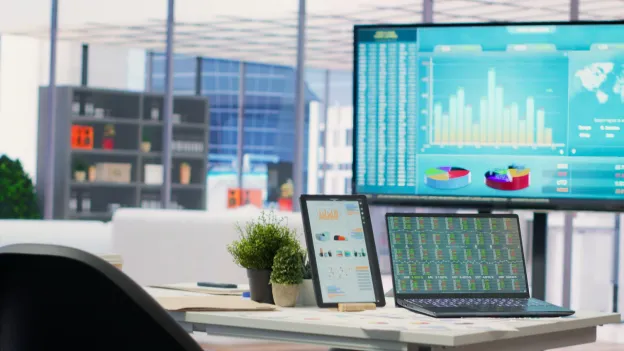
In global currency markets, conditions can shift in seconds. A central bank announcement, economic report, geopolitical development or sudden change in investor sentiment can influence exchange rates and create new trading scenarios. For today’s market participants, staying informed is only one part of the process. Having access to responsive technology can make it easier to interpret market information and act on decisions efficiently. A modern forex broker platform brings together market data, charting capabilities, trading tools and account management features, helping traders navigate fast-moving currency markets from a connected environment.
The Growing Importance of Speed in Currency Markets
The foreign exchange market operates across major financial centres and time zones, creating an environment where trading activity continues throughout the global business cycle. Price movements can develop while traders are monitoring other markets, travelling or operating outside their usual working hours.
Technology has transformed how participants respond to these conditions. Digital trading environments allow users to monitor currency prices, analyse charts and manage positions without depending entirely on traditional dealing processes. Information that once required several separate resources can now be accessed through an integrated interface.
Real-Time Information Supports Better Market Awareness
Currency prices can respond quickly to economic indicators, monetary policy decisions, employment figures, inflation data and geopolitical developments. As a result, access to timely information is an important part of participating in the market. Modern trading systems can provide live pricing and continuously updated market information. Interactive charts allow traders to observe price movements across different periods, while technical indicators can help them examine trends, momentum and other market characteristics.
Having these resources in one environment can reduce the time spent switching between different applications or information sources. Traders can concentrate more closely on understanding the market rather than repeatedly gathering basic information. For participants following multiple currency pairs, this can be especially useful. A unified trading interface allows them to compare price movements, monitor open positions and review changing market conditions with greater efficiency.
Integrated Platforms Simplify the Trading Process
Digital trading platforms have changed the way many market participants interact with currency markets. Traders can access pricing, charts, analytical features, order management and account information through increasingly integrated environments. This consolidation can make the trading workflow more straightforward. Rather than moving between separate applications to study prices and manage positions, users can often perform multiple activities within the same platform.
Modern platforms may also support several asset classes, allowing traders to monitor different financial instruments through a common interface. Such flexibility can be useful for participants who want to analyse currency markets alongside other opportunities. An integrated environment does not replace a trading strategy. Instead, it provides the technological foundation through which traders can implement their strategies with greater convenience and efficiency.
Mobile Technology Extends Market Accessibility
Smartphones have added another important dimension to digital trading. Market monitoring is no longer limited to a desktop computer, giving traders greater flexibility when they are away from their primary workstation. Mobile trading applications can provide access to live prices, charts, account information and trading functions. This can be particularly relevant to global currency markets, where developments in one region may influence market activity elsewhere.
The value of mobile access extends beyond convenience. It can allow traders to remain connected to their accounts and observe market conditions when they are travelling or working away from a desk. At the same time, mobile trading places greater importance on intuitive design and security. Essential information needs to remain easy to understand on smaller screens, while authentication and account-protection measures need to support secure access.
Automation Helps Streamline Repetitive Tasks
Automation is another area where technology is changing the trading process. Certain digital tools can assist with predefined instructions, market monitoring and repetitive activities that might otherwise require constant manual attention. For traders following several instruments simultaneously, automated functions can help maintain consistency in how specific conditions are monitored or addressed. They may also reduce the need to repeatedly perform routine actions.
Nevertheless, automation needs to be approached with an understanding of its limitations. Markets can react to unexpected events, and a system operating according to predetermined conditions may not account for every possible development. The objective should therefore be to use automation as part of a broader trading process rather than treating it as a substitute for market understanding. Human judgement remains important when interpreting changing circumstances and assessing risk.
Technology Can Support More Disciplined Risk Management
Faster access to markets needs to be balanced with responsible risk management. Currency trading can involve significant exposure to market fluctuations, particularly when leveraged products are used.
Trading technology can support risk-management processes through features such as stop-loss orders, take-profit levels, position monitoring and account-management tools. These functions can help traders establish predefined parameters rather than making every decision under immediate market pressure.
The Future of Technology-Driven Currency Trading
As financial markets become increasingly digital, trading technology is likely to continue evolving. Improvements in connectivity, mobile functionality, analytical capabilities and automation can make market participation increasingly accessible. The future of trading is not simply about making every process faster. It is also about creating connected environments where information can be accessed, analysed and acted upon efficiently. Better integration can reduce unnecessary operational steps and allow traders to devote more attention to market interpretation. For currency-market participants, this evolution can create a more flexible way to monitor global developments and manage trading activity. However, technological sophistication should always work alongside informed decision-making rather than replacing it.
For traders seeking a technology-driven environment for engaging with global financial markets, an online forex platform can provide convenient access to market information, analytical tools, execution functions and account management capabilities in one place. VPFX brings together access to forex and other asset categories within a multi-asset trading environment, with digital tools designed to support users across different devices. By combining market access with modern trading functionality, it reflects how technology can help create a more connected and efficient approach to participating in dynamic global currency markets.
