
Introduction
The Annapurna Base Camp with Poon Hill Trek is one of Nepal’s most rewarding Himalayan adventures, combining spectacular mountain scenery, traditional villages, lush forests, and the famous sunrise viewpoint of Poon Hill with a journey to the heart of the Annapurna Sanctuary. This trek is ideal for travelers who want to experience the diversity of the Annapurna region without committing to an extremely long expedition.
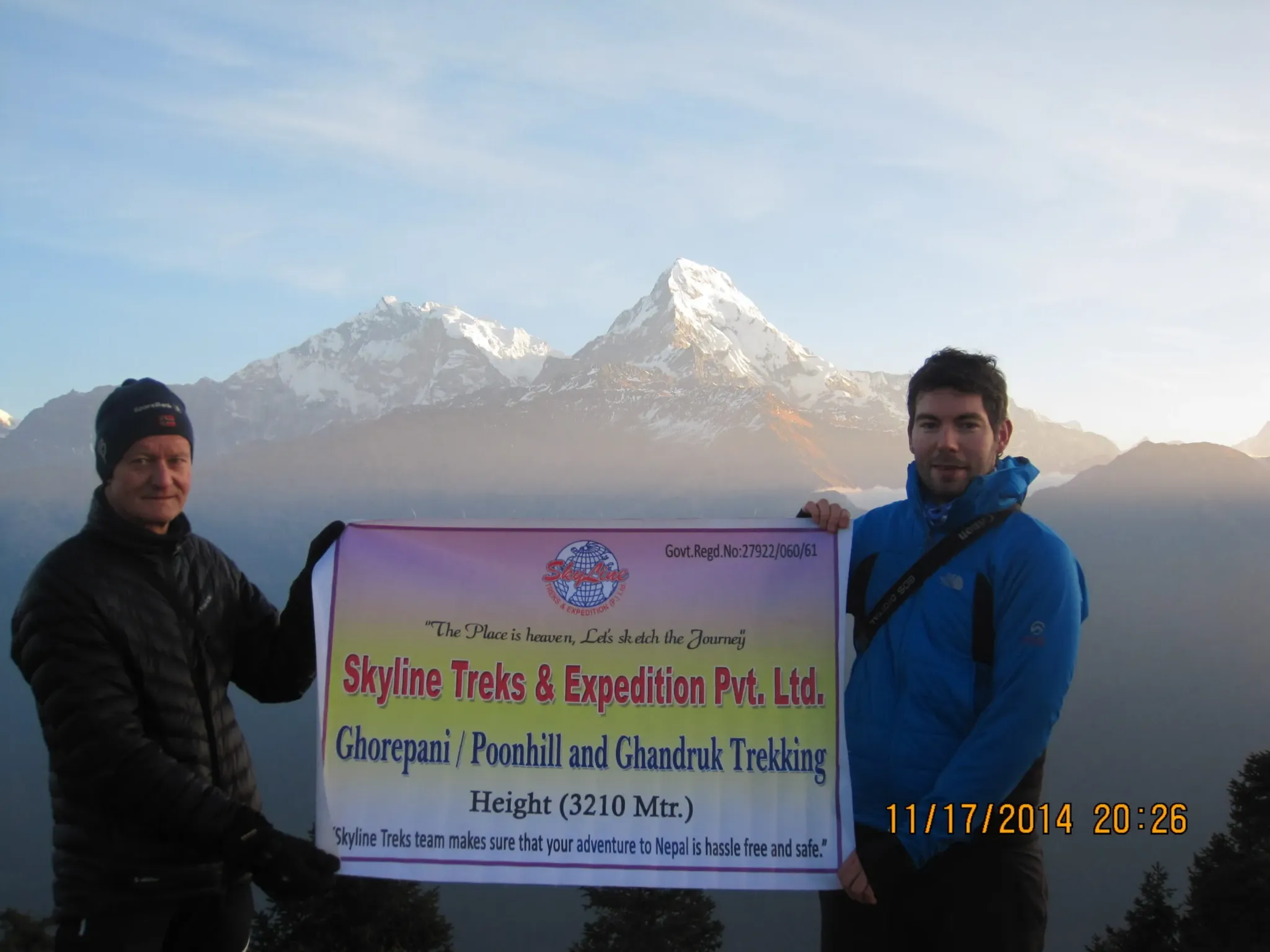
The route takes trekkers through terraced farmland, rhododendron forests, traditional Gurung and Magar settlements, and dramatic mountain landscapes. Along the way, you can enjoy views of some of Nepal’s most impressive peaks, including Annapurna South, Annapurna I, Machhapuchhre (Fishtail), Hiunchuli, and Dhaulagiri.
Combining Poon Hill and Annapurna Base Camp also provides an excellent balance between cultural experiences, moderate trekking, and high-altitude adventure. With proper preparation and a sensible itinerary, it can be an unforgettable Himalayan journey.
What Is the Annapurna Base Camp with Poon Hill Trek?
The Annapurna Base Camp with Poon Hill Trek combines two popular trekking experiences into one route.
Poon Hill, located at approximately 3,210 meters, is famous for its panoramic sunrise views over the Annapurna and Dhaulagiri mountain ranges. Annapurna Base Camp, at around 4,130 meters, lies within the spectacular Annapurna Sanctuary and provides an extraordinary 360-degree mountain environment.
Rather than visiting these destinations separately, the combined trek allows travelers to experience Poon Hill early in the journey before continuing toward Annapurna Base Camp. The route generally begins and ends near Pokhara, making it convenient for travelers who want to explore Nepal’s famous lakeside city as part of their trip.
Highlights of the Trek
The journey offers a wide variety of experiences, making it more than simply a mountain walk.
Sunrise at Poon Hill
One of the most memorable moments is reaching Poon Hill before sunrise. Trekkers typically begin the climb from Ghorepani early in the morning to reach the viewpoint in time for sunrise.
As the first light reaches the mountains, the surrounding peaks gradually change color. On a clear morning, you can see impressive Himalayan ranges stretching across the horizon.
Annapurna Base Camp
Reaching Annapurna Base Camp is the major objective of the trek. Surrounded by enormous Himalayan peaks, the base camp offers an impressive sense of scale and isolation.
The mountain walls surrounding the sanctuary create a dramatic natural amphitheater. Annapurna I, Machhapuchhre, Annapurna South, and Hiunchuli dominate the landscape.
Traditional Mountain Villages
The trek passes through numerous villages where local communities have maintained traditional lifestyles for generations. Gurung and Magar culture is particularly prominent along sections of the route.
Stone houses, prayer flags, mountain lodges, terraced fields, and local teahouses add cultural character to the journey.
Rhododendron Forests
During spring, the trail becomes particularly beautiful as rhododendron flowers bloom throughout the forests. Depending on the elevation, trekkers may also encounter oak, pine, bamboo, and other Himalayan vegetation.
Typical Annapurna Base Camp with Poon Hill Trek Itinerary
The exact itinerary can vary depending on the trekking company, transportation arrangements, walking pace, and acclimatization strategy. A typical itinerary takes approximately 10 to 12 days, including travel from Pokhara and the trek itself.
Day 1: Pokhara to Trek Starting Point
The journey usually begins with transportation from Pokhara to a trailhead such as Nayapul, Ulleri, or another road-accessible settlement. From there, the trek begins through mountain villages and forested trails.
Day 2: Trek to Ghorepani
The route continues toward Ghorepani, an important village and popular overnight stop. The trail passes through forests and traditional settlements before reaching the higher Himalayan landscape.
Ghorepani is also the starting point for the early-morning climb to Poon Hill.
Day 3: Poon Hill Sunrise and Trek to Tadapani
Trekkers normally wake before dawn and climb to Poon Hill for sunrise. After enjoying the mountain panorama, they return for breakfast before continuing toward Tadapani.
This section combines forest trails with occasional mountain viewpoints.
Day 4: Tadapani to Chhomrong
The trail descends through forest before climbing again toward Chhomrong. This village is strategically located on the approach to the Annapurna Sanctuary and provides impressive views of the surrounding mountains.
Day 5: Chhomrong to Himalayan or Deurali
The route gradually enters the deeper Annapurna Sanctuary. Trekkers pass through settlements such as Sinuwa, Bamboo, Dovan, and Himalayan before reaching a higher overnight location.
The landscape becomes increasingly rugged as the elevation rises.
Day 6: Himalayan to Annapurna Base Camp
This is one of the most exciting days of the trek. The trail passes through Machhapuchhre Base Camp before continuing toward Annapurna Base Camp.
As you approach the sanctuary, the mountain scenery becomes increasingly dramatic. Spending the night near Annapurna Base Camp allows trekkers to experience the high-altitude environment during both sunset and sunrise.
Day 7: Annapurna Base Camp to Bamboo
After enjoying the morning mountain views, trekkers begin the descent. The return journey follows much of the same route, but the scenery can look completely different when viewed from the opposite direction.
Day 8: Bamboo to Jhinu Danda
The trail continues toward lower elevations, eventually reaching Jhinu Danda. The area is famous for its natural hot springs, providing an opportunity to relax after several demanding trekking days.
Day 9: Jhinu Danda to Pokhara
Depending on road conditions and the selected route, trekkers walk toward the roadhead before taking transportation back to Pokhara.
Some itineraries include additional days in the Annapurna region, while others allow travelers to return to Pokhara relatively quickly.
Best Time for Annapurna Base Camp with Poon Hill Trek
Choosing the right season can significantly affect the trekking experience.
Spring: March to May
Spring is one of the most popular seasons. The weather is generally favorable, mountain visibility can be excellent, and rhododendron forests are often in bloom.
For photographers and nature lovers, spring offers particularly attractive scenery.
Autumn: September to November
Autumn is another excellent trekking period. Following the monsoon, the atmosphere is often clearer, and mountain views can be spectacular.
October and November are traditionally busy trekking months, so popular teahouses and trails may have more visitors.
Winter: December to February
Winter brings colder temperatures and snow at higher elevations. Annapurna Base Camp can become significantly colder, and snow may affect parts of the trail.
Experienced trekkers can still undertake the journey with suitable clothing, equipment, and preparation.
Monsoon: June to August
The monsoon season brings heavy rainfall to many parts of Nepal. Trails can become muddy and slippery, while clouds may obscure mountain views.
However, some experienced trekkers still visit the Annapurna region during this period, particularly because the area can be quieter.
Difficulty Level
The Annapurna Base Camp with Poon Hill Trek is generally considered a moderate to challenging trekking route.
The primary challenges include:
-
Long walking days
-
Numerous stone staircases
-
Continuous ascents and descents
-
Increasing altitude
-
Cold conditions near base camp
-
Variable mountain weather
Poon Hill itself requires an early morning uphill climb, while the journey beyond Chhomrong includes substantial elevation gain.
You do not necessarily need advanced mountaineering experience, but a reasonable level of fitness is important. Regular walking, hiking, stair climbing, and cardiovascular exercise before the trek can help prepare your body.
Altitude and Acclimatization
Altitude is an important consideration because Annapurna Base Camp sits at approximately 4,130 meters.
Trekkers should ascend gradually and pay attention to how their bodies respond. Common symptoms of altitude sickness can include headache, nausea, dizziness, fatigue, and difficulty sleeping.
A sensible itinerary includes appropriate acclimatization and avoids rushing to higher elevations. Staying hydrated, eating adequately, walking at a comfortable pace, and communicating symptoms early are important parts of responsible high-altitude trekking.
If serious altitude-related symptoms develop, descending to a lower elevation is an important safety measure.
Accommodation and Food
Teahouses and trekking lodges are widely available along the Annapurna route. Accommodation is generally simple but comfortable, with basic rooms and shared bathroom facilities in many locations.
Meals commonly include traditional Nepali dishes as well as international options.
Dal bhat, consisting of rice, lentil soup, vegetables, and accompanying dishes, is a popular choice because it provides substantial energy for long trekking days. Noodles, soups, pasta, potatoes, eggs, bread, and other simple meals are also commonly available.
At higher elevations, food choices may become more limited and prices can increase because supplies must be transported into remote mountain areas.
What to Pack
Packing efficiently is important for the Annapurna Base Camp trek. Essential items generally include:
-
Comfortable trekking boots
-
Warm layers and thermal clothing
-
Waterproof jacket and trousers
-
Down or insulated jacket
-
Trekking trousers
-
Warm hat and gloves
-
Sunglasses and sunscreen
-
Sleeping bag suitable for cold conditions
-
Water bottle or hydration system
-
Headlamp
-
Trekking poles
-
Personal first-aid supplies
-
Basic toiletries
-
Power bank
-
Identification and required permits
Your exact packing list should be adjusted according to the season and itinerary.
Permits and Trekking Preparation
Trekkers should arrange the required permits and follow the applicable regulations for the Annapurna Conservation Area. Requirements can change, so it is advisable to confirm current permit rules before departure.
Travelers should also arrange appropriate travel insurance that covers trekking at the planned altitude. Insurance policies vary, so check the altitude limits and emergency evacuation provisions carefully.
Hiring a licensed guide or joining an organized trekking service can also make logistics easier, particularly for first-time visitors to Nepal.
Why Choose the Combined Poon Hill and ABC Trek?
The biggest advantage of combining these routes is variety.
Poon Hill provides an accessible Himalayan viewpoint and a spectacular sunrise experience, while Annapurna Base Camp takes trekkers deeper into the mountain sanctuary. The journey also combines villages, forests, farmland, rivers, waterfalls, and high-altitude landscapes.
For travelers with enough time, the combined itinerary offers a more comprehensive experience of the Annapurna region than visiting either destination alone.
Conclusion
The Annapurna Base Camp with Poon Hill Trek offers an exceptional combination of Himalayan scenery, cultural encounters, forest trails, mountain villages, and high-altitude adventure. From the sunrise over the Annapurna and Dhaulagiri ranges at Poon Hill to the dramatic peaks surrounding Annapurna Base Camp, every stage of the journey provides a different perspective of Nepal’s mountain landscape.
With proper preparation, appropriate clothing, gradual acclimatization, and a well-planned itinerary, the trek can be a memorable experience for adventure travelers seeking a rewarding Himalayan journey.
Whether you are interested in photography, mountain scenery, local culture, or simply experiencing the Himalayas on foot, combining Poon Hill and Annapurna Base Camp creates a diverse and rewarding trekking adventure in Nepal.
